
If you have been on TRT for a while, an elevated hematocrit on a routine lab panel is one of the most common findings your physician will flag, and one of the least explained. It is not a rare complication or a sign something has gone wrong. It is a direct, expected effect of raising testosterone, and it is exactly why TRT is a monitored treatment rather than a start-it-and-forget-it prescription. At True Roots in La Canada Flintridge, this is tracked on every TRT patient's bloodwork from day one.
Why does testosterone raise hematocrit in the first place?
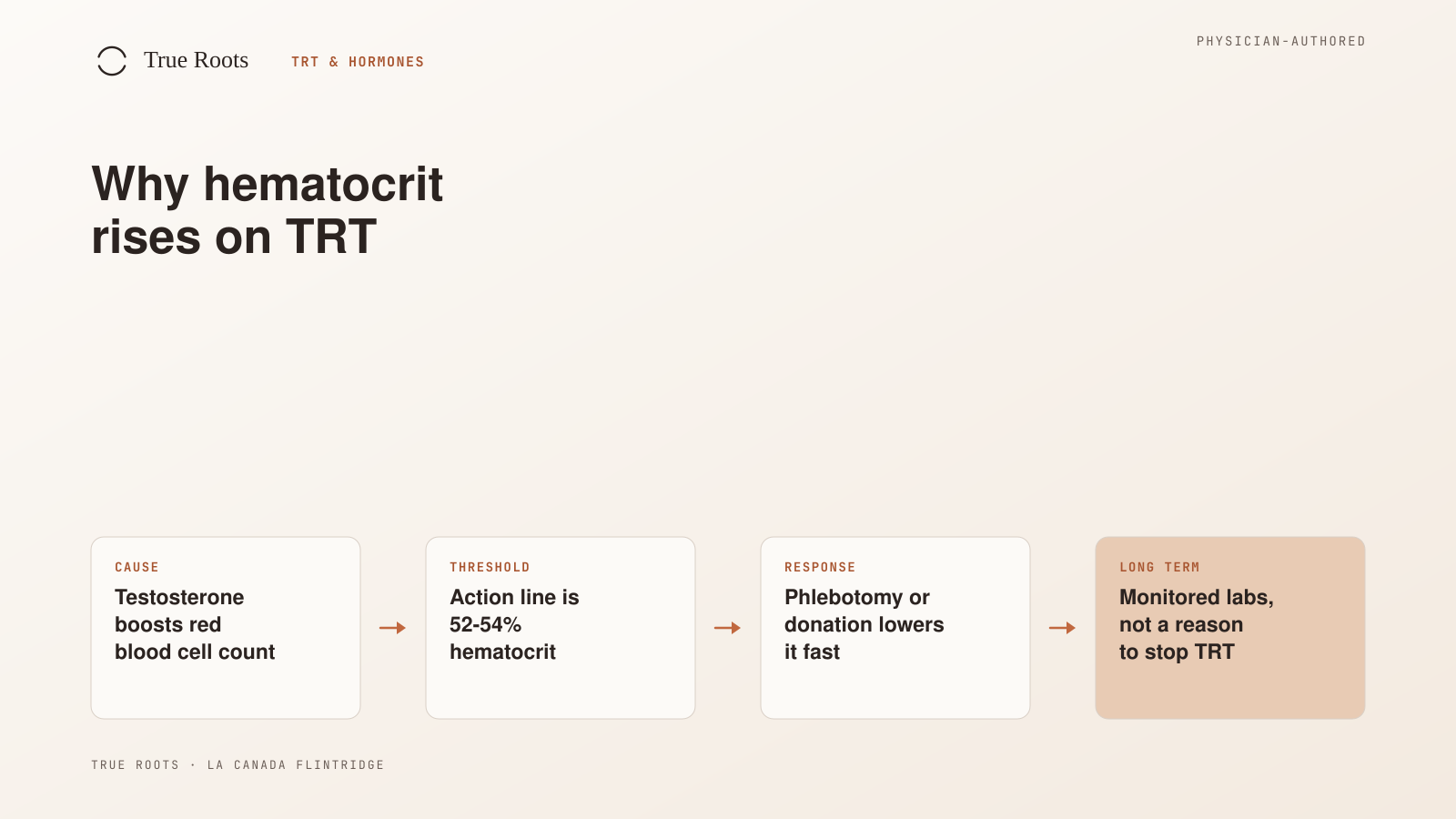
Testosterone stimulates the kidneys to produce more erythropoietin, the hormone that signals bone marrow to manufacture red blood cells. More red blood cells raised relative to total blood volume means a higher hematocrit. This is the same mechanism, incidentally, behind why some men on TRT feel noticeably more energetic: more red blood cells means more oxygen-carrying capacity. The same mechanism that helps also has a ceiling worth respecting.
Prevalence is high enough that this should be treated as a near-certainty to monitor rather than an edge case: elevated hematocrit (polycythemia) has been found in a substantial share of TRT users in published data, and men on TRT make up a measurable share of regular blood donor populations for exactly this reason. If you are on TRT long enough, this is a conversation you are likely to have with your physician at some point.
How high is too high?
Clinical guidance generally sets an action threshold around 52 to 54 percent hematocrit, though your physician may intervene earlier depending on your other risk factors, symptoms, or how quickly the number is trending. Above that range, blood becomes measurably more viscous, and thicker blood is associated with a higher risk of clotting-related events. This is exactly why hematocrit is one of the standard markers checked at every TRT follow-up, alongside testosterone, estradiol, and PSA. See is TRT safe for the fuller side-effect and monitoring picture.
What actually gets done about it
A high hematocrit reading is not a reason to panic, and in most cases it is not a reason to stop TRT. It is a reason to adjust the plan. The tools your physician has, roughly in order of how they are typically used:
- Dose or protocol adjustment. Larger, less frequent injections tend to create bigger peaks in testosterone and estradiol, and bigger peaks are associated with a stronger hematocrit response. Moving to smaller, more frequent doses, or trying a different delivery method, can blunt the effect without abandoning treatment.
- Therapeutic phlebotomy. A supervised blood draw specifically to reduce red blood cell volume, similar to a blood donation but managed as part of your treatment plan rather than as a one-off decision.
- Blood donation. Some men manage mild elevations by donating blood regularly, which can genuinely help, but it works best as one piece of a monitored plan rather than a substitute for figuring out why the number is climbing.
- Hydration and lifestyle factors. Dehydration alone can push hematocrit higher on a single reading, which is one reason your physician looks at trends across multiple draws rather than reacting to one number in isolation.
- Stopping treatment. Reserved for cases that do not respond to the adjustments above, or where other risk factors make continued elevation unacceptable. This is the last option, not the first.
Why this is a monitoring story, not a scare story
The existence of a real, common side effect does not make TRT unsafe. It makes ongoing bloodwork non-negotiable. The men who run into trouble with hematocrit are, almost without exception, the ones without regular monitoring, not the ones on a properly supervised protocol. If you are already on TRT elsewhere without regular hematocrit checks, that is worth flagging to whoever manages your care. If you are considering starting, this is one of several reasons how testosterone is tested and ongoing labs matter as much as the prescription itself.
This article is educational and not a substitute for personalized medical advice.