
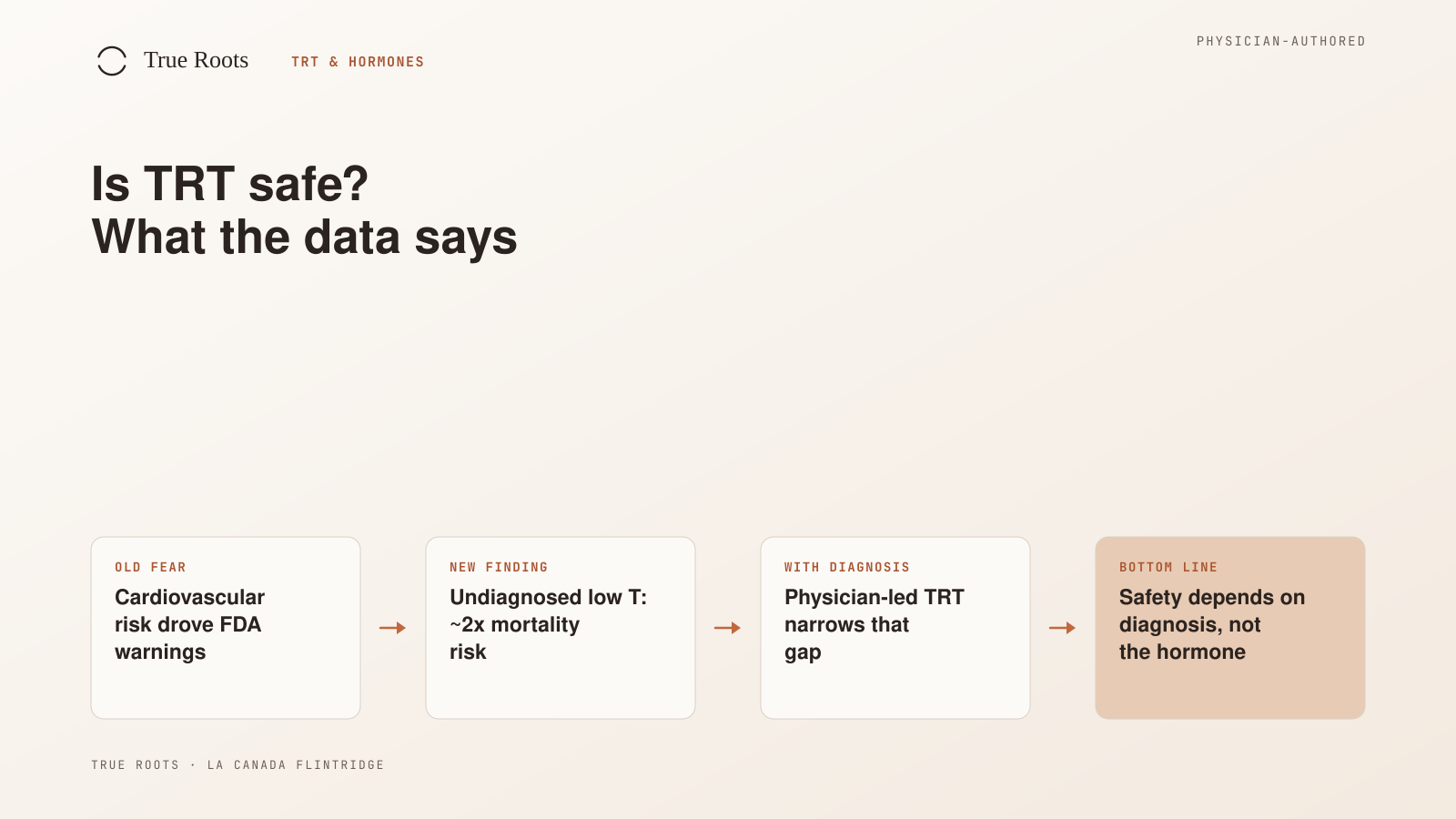
TRT has a long track record and is generally safe for appropriate candidates when it is properly prescribed and monitored by a physician. Like any medical treatment, it carries potential side effects, and the honest picture is that the risk profile of supervised, healthy-range TRT is very different from the risk of unsupervised, high-dose use. The single biggest factor in safety is physician oversight: confirmed diagnosis, sensible dosing, and regular bloodwork. At True Roots in La Canada Flintridge, TRT is physician-led by board-certified Dr. Luis Valle, with monitoring built into every step.
What are the real side effects of TRT?
Most TRT side effects are manageable and are caught early through monitoring. The potential ones include:
- Acne or oily skin, especially early on
- Fluid retention, which can cause mild swelling
- Increased red blood cell count (elevated hematocrit), which thickens the blood and is one of the most important things to monitor
- Breast tenderness or enlargement, related to estrogen balance
- Testicular shrinkage and reduced fertility, because external testosterone signals the body to slow its own production (see TRT and fertility)
- Sleep changes in some men
Most of these are dose-related and respond to adjusting the dose, the delivery method, or adding supportive measures. This is exactly why TRT is monitored rather than set-and-forget.
Does TRT cause prostate cancer?
Current evidence does not show that properly monitored TRT causes prostate cancer, a concern rooted in older theory that has not held up as a simple cause-and-effect relationship. However, testosterone can stimulate an existing prostate cancer, so responsible care includes PSA testing and a prostate assessment before and during treatment. TRT is generally avoided in men with active, untreated prostate cancer. The point is not that TRT is automatically dangerous to the prostate, but that screening and monitoring are non-negotiable parts of doing it safely.
Does TRT cause heart problems?
The relationship between TRT and cardiovascular health has been studied extensively, and recent evidence has been reassuring for appropriately selected and monitored men. The FDA's Feb 2025 class-wide labeling review removed the cardiovascular boxed warning from testosterone products based on the TRAVERSE trial (5,204 men, mean 33-month follow-up), which found major adverse cardiac events in 7.0% of testosterone users versus 7.3% on placebo, no increased risk. One real, monitorable effect is that TRT can raise the red blood cell count and blood pressure, so this is checked regularly and managed if either rises too high. A good physician weighs your individual cardiovascular risk factors before starting and monitors you throughout. As with the prostate, the theme is that safety comes from selection and monitoring, not from assuming the treatment is either harmless or dangerous.
Does it matter whether you actually have a diagnosis first?
Yes, more than most people assume. A 2026 study in eBioMedicine, following roughly 359,000 men for up to 10 years, found men who used testosterone without a documented low-testosterone diagnosis had about 50% higher risk of a serious cardiovascular event and nearly double the all-cause mortality risk compared with men who used it with a confirmed deficiency diagnosis. The finding is observational, so it does not prove the missing diagnosis directly causes the worse outcomes, but it lines up with everything else in this article: the diagnosis, the dosing to a healthy range, and the monitoring are what make TRT safe. Skipping the first step is where the real risk appears to live.
The myths, briefly
A few persistent myths are worth correcting directly: TRT is not the same as anabolic steroid abuse, it does not inevitably cause aggression or "roid rage," and at properly dosed therapeutic levels it is a measured medical treatment, not a shortcut to unnatural size. We cover these in detail in TRT myths debunked and TRT vs. steroids. The reason the distinction matters here is that most of the scary stories attached to "testosterone" come from unsupervised high-dose misuse, not from monitored TRT.
What actually makes TRT safe?
TRT is safest when three things are true:
- It is based on a confirmed diagnosis. Symptoms plus blood tests showing genuinely low levels, not a guess. See how testosterone is tested.
- It is dosed to a healthy range. The goal is restoring normal levels, not pushing them as high as possible. Excessive dosing is where most problems begin.
- It is monitored. Regular bloodwork tracks testosterone, estradiol, red blood cell count, PSA, and other markers, so anything that drifts is caught and adjusted early.
This is the difference between physician-led TRT and ordering testosterone with no oversight. The treatment is the same molecule, but the safety is not remotely the same.
Who should be cautious with TRT?
TRT requires extra caution or may be inappropriate for men with active prostate or breast cancer, untreated severe sleep apnea, very high red blood cell counts, certain heart conditions, or uncontrolled health issues, and for men actively trying to conceive. A thorough evaluation screens for these before treatment begins, which is part of why the first step is always a proper consultation rather than a prescription on request. To understand the treatment itself, see what TRT is.
This article is educational and not a substitute for personalized medical advice.