
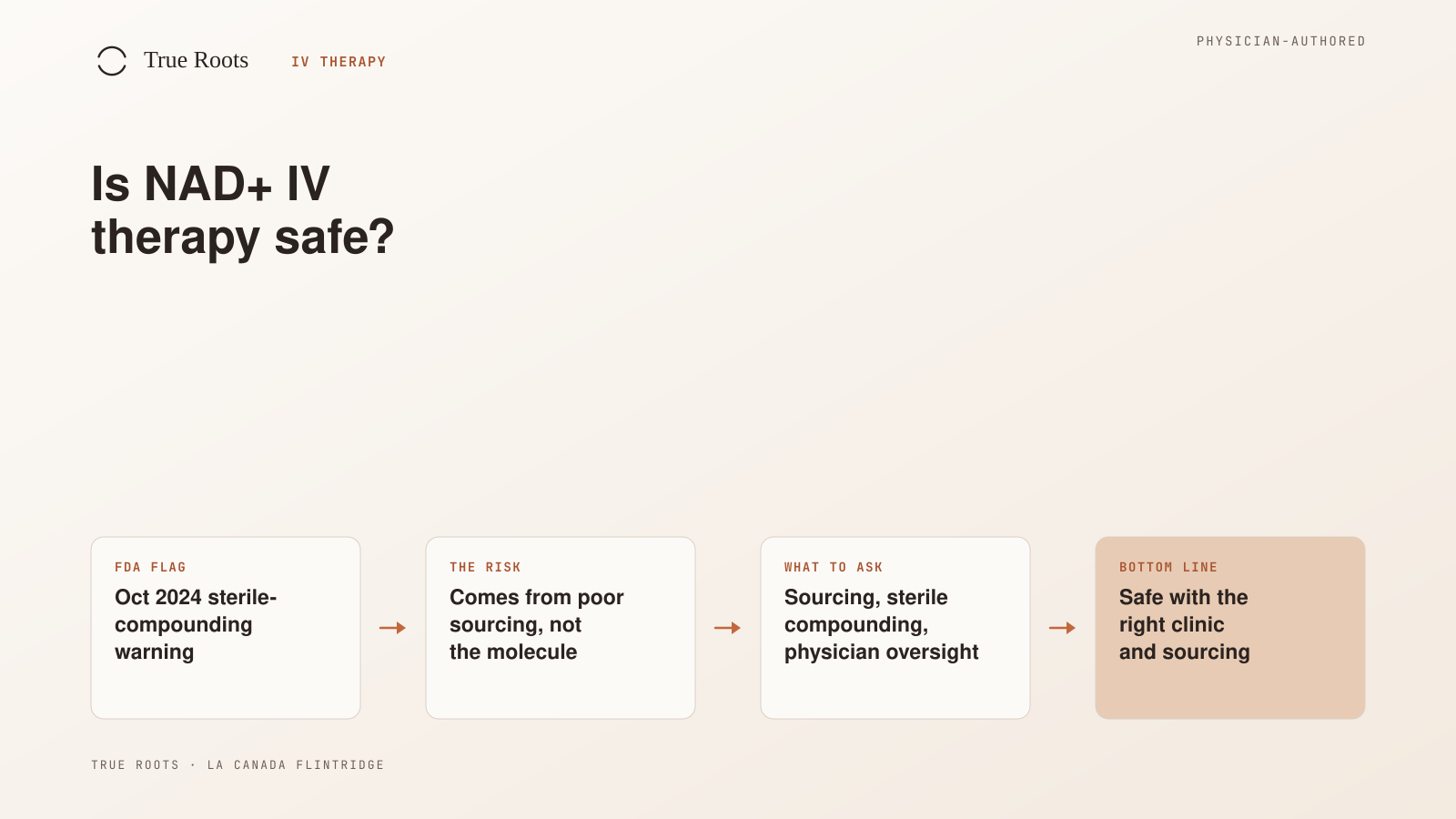
Most clinic pages selling NAD+ IV therapy talk about energy, cellular repair, and longevity. Very few mention that the FDA has flagged a real, documented safety problem with how some NAD+ IV products are made. Both things are true at once: NAD+ is a legitimate molecule with real biology behind it, and the sourcing of the product going into your vein is a genuine safety question, not a formality.
Why sourcing is the whole safety question here
No FDA-approved commercial NAD+ IV formulation exists. Every NAD+ infusion sold today, regardless of where you get it, is a compounded product. That single fact reframes the entire safety conversation: this is not a case of "is the drug safe," because there is no single, standardized drug. It is a case of "was this specific batch made correctly," and that depends entirely on where a clinic sources its NAD+ and how it is prepared. See our broader look at what the evidence says about NAD+ for the efficacy side of that picture.
What the FDA actually found
In October 2024, the FDA issued a compounder safety reminder warning that some compounders were using cheap, food-grade NAD+, material intended only for oral supplements, to manufacture products meant for sterile IV injection. Food-grade ingredients are not processed to the standard required for injection safety, and they carry meaningful contamination risk from microbes and endotoxins, bacterial byproducts that can trigger a serious inflammatory response even after the bacteria themselves are gone.
This was not a hypothetical warning. The FDA has received adverse event reports following NAD+ injectable use, including severe chills, shaking, vomiting, and fatigue, some serious enough to require medical treatment. At least one Class I recall, the FDA's most serious recall category, reserved for situations where a product could cause serious injury or death, was issued for injectable NAD+ specifically over elevated endotoxin levels.
What a Class I recall actually means
The FDA groups recalls into three classes by severity. Class I is the top tier: a reasonable probability that using the product will cause serious adverse health consequences or death. An injectable NAD+ product reaching that classification is a genuine, documented safety event, not an abstract regulatory footnote. It happened because the underlying material was not manufactured to injection-grade standards, which is precisely the sourcing distinction most marketing pages skip.
What to actually ask before you book
Given that every NAD+ IV product on the market is compounded, the sourcing questions carry real weight:
- Where is your NAD+ sourced from, and is it manufactured specifically for sterile injection, not repurposed food-grade or oral-supplement material?
- Does a physician evaluate you before infusion, including screening for pregnancy, kidney, liver, or cardiac disease, active cancer, and interacting medications?
- Is the infusion administered and monitored by trained clinical staff who can slow the rate if you have a reaction, since NAD+ pushed too fast commonly causes chest tightness, flushing, nausea, and cramping?
A clinic that answers these plainly, and can speak to its supplier's manufacturing standard rather than just its marketing claims, is doing the part of this that is actually controllable.
What physician-led sourcing does and does not fix
A physician-led practice that sources carefully and screens patients properly addresses the controllable half of the safety picture: contamination risk from improper manufacturing, and complications from infusing someone with an undiagnosed contraindication. What it does not change is the separate, honest evidence gap: outcome trials for IV NAD+ specifically, as opposed to its underlying biology, remain limited. Being safe and being proven are two different claims, and a responsible clinic should never blur them into one.
This article is educational and not a substitute for personalized medical advice.