
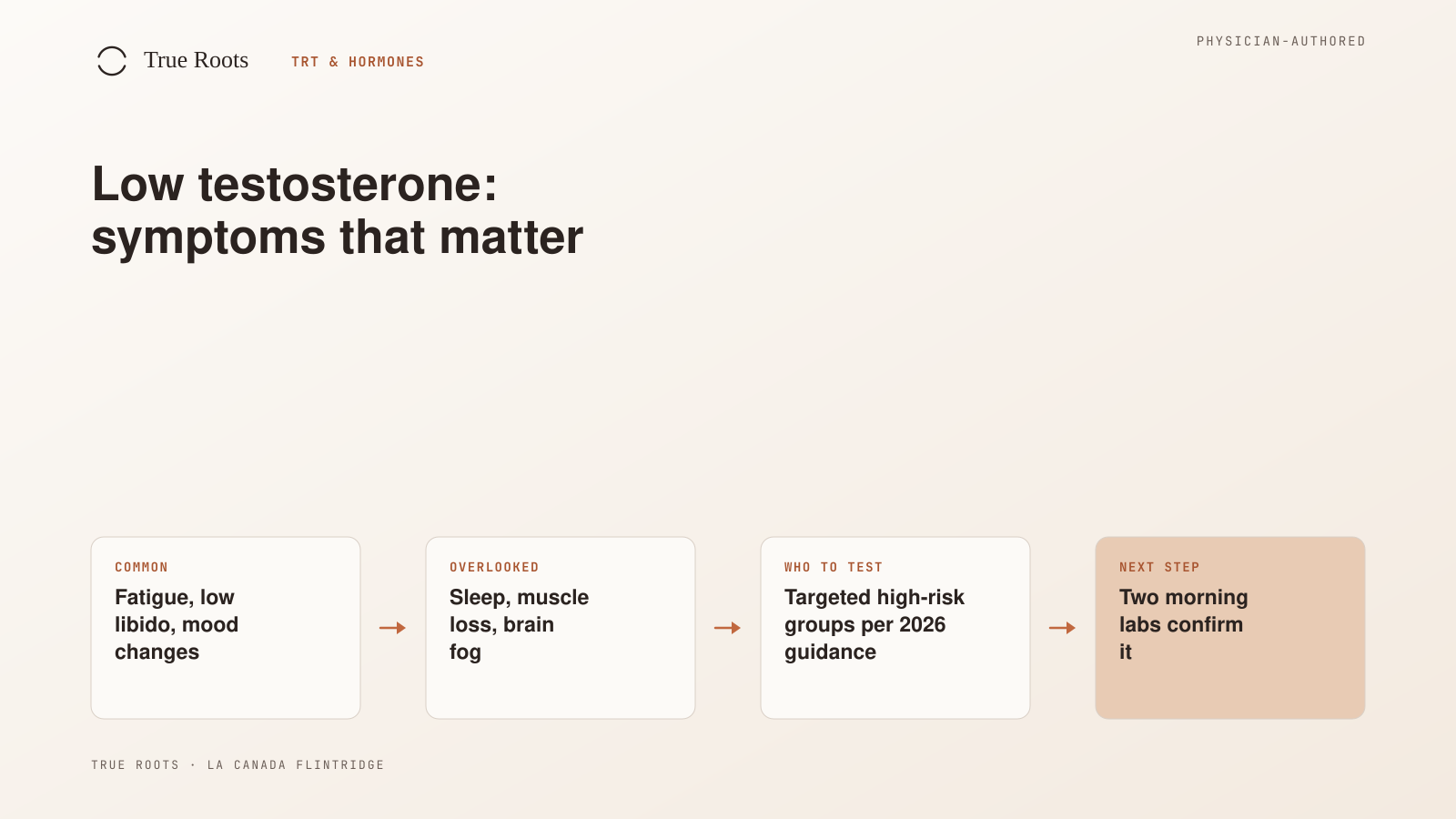
The most common signs of low testosterone are persistent fatigue, low libido, erectile difficulties, loss of muscle and strength, increased body fat, low mood, brain fog, and poor sleep. The tricky part is that these symptoms develop gradually and overlap with stress, aging, and other conditions, so many men dismiss them for years. Low testosterone cannot be diagnosed by symptoms alone, but recognizing the pattern is what prompts the simple blood test that can confirm it. At True Roots in La Canada Flintridge, evaluation and treatment are physician-led by board-certified Dr. Luis Valle.
12 common symptoms of low testosterone
Low testosterone (low T) affects energy, body composition, mood, and sexual function. The most frequently reported symptoms include:
- Persistent fatigue that does not improve with sleep
- Low libido or reduced interest in sex
- Erectile difficulties or weaker, less frequent erections
- Loss of muscle mass and strength despite training
- Increased body fat, especially around the midsection
- Low or depressed mood, irritability, or a shorter temper
- Brain fog and reduced mental sharpness
- Poor or unrefreshing sleep
- Reduced motivation and drive, a loss of your usual edge
- Decreased exercise performance and slower recovery
- Reduced body or facial hair over time
- Lower bone density in the long term
You do not need all twelve. Many men have a cluster of a few, often fatigue, low libido, and low mood together, which is enough to warrant testing.
What does low testosterone feel like?
Many men describe low testosterone as feeling flat: tired, unmotivated, and somehow not themselves, as if they have lost a step. You drag through the day even after a full night's sleep, your interest in sex fades, the gym stops producing results, and your mood runs low or short. Because it comes on slowly, it is easy to attribute to age, work stress, or just "getting older." That gradual onset is exactly why low T is so often missed.
At what age does testosterone drop?
Testosterone typically begins a slow decline after about age 30, falling on average around 1 percent per year. But age is not destiny: some men keep healthy levels well into later life, while others develop symptomatic low T earlier, sometimes in their 30s. This is why age alone does not tell you whether you have low testosterone, and why testing matters more than a number on your birth certificate. See normal testosterone levels by age for context on what the numbers mean.
Why these symptoms can be misleading
Here is the honest caveat: every symptom on the list above has other possible causes. Fatigue can come from poor sleep, thyroid issues, or stress. Low libido can be psychological. Weight gain and low mood have many drivers. This overlap cuts both ways, you might have low T and not know it, or you might blame low T for something else entirely. That is precisely why diagnosis requires a blood test interpreted by a physician, not a symptom checklist alone.
How do you confirm low testosterone?
The only way to confirm low testosterone is a blood test, ideally drawn in the morning when levels are highest, and typically confirmed on a second test on a separate day. A good evaluation measures both total and free testosterone along with related markers, and interprets them alongside your symptoms and overall health. Learn exactly how to get your testosterone tested.
When should you get tested?
Consider testing if you have several of the symptoms above, especially the combination of fatigue, low libido, and low mood, or if changes in your energy, body, or drive are persistent and affecting your life. A July 2026 Endocrine Society statement adds a useful data point here: it advises against testing every man as a matter of routine, since symptom checklists alone are not reliable enough to justify population-wide screening, but it explicitly calls for targeted testing in higher-risk groups, including men with type 2 diabetes or metabolic syndrome. If you fall into a higher-risk group or recognize a real cluster of symptoms, testing is worth pursuing. If your levels are normal, you have ruled out a common and treatable cause and can look elsewhere. If they are low, you have found something that can often be addressed. To understand the treatment itself, see what TRT is, and see how testosterone is tested for the two-morning-draw standard used to confirm a diagnosis.
This article is educational and not a substitute for personalized medical advice.